
ETP Plant
ETP Plant For Textile Industry
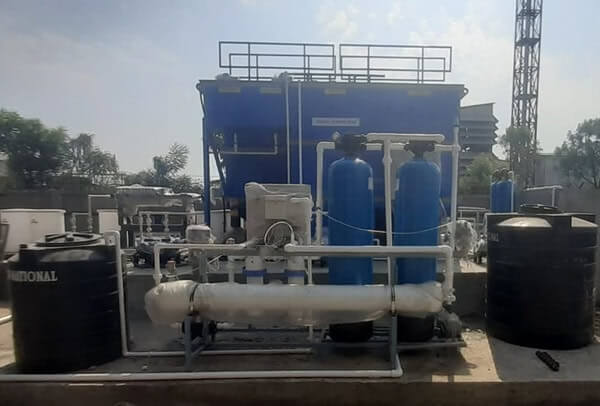
Effluent Treatment Plant for Textile Industry
Textile Wastewater Treatment Plant Manufacturer in India
The textile industry is one of the largest water-consuming industrial sectors, involved in processes such as desizing, scouring, bleaching, dyeing, printing, washing, and finishing. These operations generate large volumes of wastewater with high color, chemicals, salts, and organic load, making effluent treatment a critical requirement.
Textile industry wastewater is highly complex and typically contains high COD, variable BOD, color, salts (TDS), dyes, surfactants, oils, and auxiliary chemicals, along with wide pH fluctuations. Discharge of untreated or partially treated textile effluent can cause serious environmental pollution and strict regulatory action by CPCB / SPCB authorities.
ALEP MANAGEMENT LLP is a reliable ETP manufacturer for textile industry in India, providing custom-engineered, compliance-ready wastewater treatment solutions for textile processing units, dyeing houses, and fabric manufacturing plants.
Characteristics of Textile Industry Wastewater
Wastewater generated from textile units mainly originates from:
- Desizing, scouring, and bleaching processes
- Dyeing and printing operations
- Fabric washing and finishing
- Floor and equipment cleaning
Key Challenges in Textile Wastewater Treatment
Textile industries face several treatment and compliance challenges, including:
- Removal of intense color and refractory COD
- Managing high TDS and salt content
- Treating multiple effluent streams with variable composition
- Achieving SPCB discharge or ZLD norms
- Handling large wastewater volumes
- Sludge generation and disposal
ALEP MANAGEMENT LLP addresses these challenges through process-specific ETP design and proven treatment strategies.
Importance of a Dedicated ETP for Textile Industry
A generic industrial ETP or STP is not suitable for textile wastewater due to:
- High color and chemical content
- Large variation in effluent quality
- Stringent regulatory scrutiny
A properly designed ETP for textile industry ensures:
- Effective reduction of COD, color, and suspended solids
- Stable plant operation under continuous processing
- Long-term compliance with CPCB / SPCB norms
- Reduced environmental impact and water pollution
- Safe discharge, reuse, or ZLD operation
Applications of Textile Industry ETP Solutions
ETP systems designed by ALEP MANAGEMENT LLP are suitable for:
- Textile dyeing and printing units
- Fabric processing houses
- Garment washing and finishing units
- Yarn dyeing units
- Integrated textile mills
Treated Water Reuse & ZLD Integration
Depending on local regulations and water scarcity, textile ETPs can be integrated with:
- Advanced tertiary treatment systems
- Zero Liquid Discharge (ZLD) solutions
- RO, MEE, and evaporator systems
This enables:
- Maximum water recovery and reuse
- Reduced freshwater consumption
- Compliance with ZLD requirements
Why ALEP MANAGEMENT LLP for Textile Industry ETP?
- Proven expertise in textile wastewater treatment
- Strong capability in high color & high COD effluent handling
- Experience in ETP + ZLD integrated systems
- Custom-engineered, compliance-focused designs
- Turnkey execution – design, supply, installation & commissioning
- Support for CTE / CTO & environmental documentation
- Reliable AMC and long-term technical support
ALEP MANAGEMENT LLP delivers robust, scalable, and future-ready ETP solutions tailored to the needs of textile industries.